How to Automate Google Sheets

You automate Google Sheets in three layers. Formulas and functions handle anything that stays inside the sheet. Apps Script and scheduled triggers handle repeatable jobs on a timer. Getting the numbers in from tools that have no export is the layer most people still do by hand, and the one worth handing to an agent like WebRun.

Google Sheets quietly became the company database

Google Sheets, which plenty of people still call a Google Spreadsheet, is the free spreadsheet in Google Workspace. In most small companies it quietly became the place where the business is actually run. It holds the customer list, the job schedule, the stock count, the commission working and the numbers someone reads out on Monday morning.

It earned that job by being easy to get into. It opens in a browser, several people can type in it at once, and nobody has to ask an administrator for a licence. The bookkeeper, the office manager and the owner can all be in the same tab at the same time, which is more than can be said for most of the software those three were given.

So the spreadsheet sits downstream of every other tool you own. The booking system, the card terminal, the accounting package and the inbox all feed one sheet, because it is the only place all of it can sit side by side.

Every number in it arrives by hand

Almost none of the time spent on a spreadsheet is spent thinking. It goes on moving numbers into it.

Someone opens the booking system every morning, reads yesterday's total off a dashboard, and types it into a cell. Someone exports a report from the CRM, opens the CSV, deletes three columns and pastes the rest into a tab. Someone checks four supplier portals for prices that changed and updates a column by hand. Someone copies the same figures into a second, tidier sheet for a manager who will never open the first one.

Each takes a few minutes, which is exactly why nobody ever fixes them. They become visible only when the person who does them is on holiday and the sheet goes stale for a fortnight, or when a number gets typed wrong and a decision gets made on it.

The google.com homepage, the app these three jobs run in. Google Sheets
Filling the sheet Yesterday's orders, bookings, balances and ad spend, collected from wherever they live and written into the right row before you open the tab.
Working through the sheet Taking each row and doing something with it somewhere else: a reminder sent, a price checked, a status looked up and written back.
Getting the sheet read Turning the tab nobody opens into a short summary that lands in the place your team already looks every morning.

Formulas only reach what is already open to them

The sheet does more on its own than most people use, and it is worth knowing how far that reaches before paying for anything. One sheet can read a range out of another and stay in step with it. A long tab can be filtered down to a short one that updates itself. A table on a public web page can be pulled in and refreshed. Apps Script will run a job on a timer, so a nightly tidy-up or an emailed snapshot really can be set and forgotten.

Every one of those has the same ceiling. They can only reach what is already open to them: another spreadsheet, a public page, a tool with an API and someone on hand to write against it.

The numbers you actually want are almost never in those places. They are behind a login, on a screen, in a supplier portal or a bank or a booking system or a twenty-year-old piece of trade software, sitting there in plain sight with no export button anywhere near it. That is the wall, and it is the reason someone in your office is still retyping figures at nine in the morning.

A spreadsheet that goes and fetches for itself

Change that, and the question stops being what can I import and becomes what do I want to know.

You buy from six suppliers, and every one shows live prices and stock behind its own login. That can be a column instead: this morning's price against what you paid last time, so the line that moved is obvious before you order.

You ship. Tracking numbers go out and somebody spends an afternoon pasting them into courier sites one at a time. Those statuses can be sitting in the sheet by the time you open it, with anything that stopped moving pushed to the top.

The same trick works on anything you can see in a browser. What your competitors are charging today. Which of your listings slipped off the first page. The takings from a system that only ever shows them on a dashboard. Whether the permit you are waiting on has changed status yet. None of it needs an API, a developer, or an integration somebody else has to build first.

One rule holds across all of it: automate the collecting, keep the deciding. A sheet that fills itself overnight is a gift. A sheet that emails your customers on its own is a risk, and should never send without a person saying yes.

An agent does the retyping

Between the portal where the number lives and the cell it belongs in sits a person. Only the deciding needs one.

WebRun is an AI agent that works a real Chrome browser, signed in as you. It opens the supplier portal, reads the price off the screen, and writes it into the right row of your spreadsheet. Because it uses the browser rather than an API, it reaches anything you can reach: no key to generate, no add-on, no integration that has to exist first.

It runs on your schedule in your own private environment. You can watch a run and stop it mid-way, and anything irreversible drafts and waits for you.

The workflows below are already built. Each one names the apps it touches and the steps it takes, so you can read what it does before you switch it on.

Questions people ask

Do I need to turn on the Google Sheets API or share my spreadsheet?

No. WebRun opens Google Sheets in a real browser signed in as you, so it works with the access you already have. There is no API key, no add-on and no change to the sharing settings on the file.

Will it overwrite the data already in my sheet?

Only where you point it. Most workflows append a new row or write into one named column, and each template spells out which cells it touches before you turn it on. Writing to a raw tab that your working tabs read from keeps typed work safe either way.

Can it pull numbers out of a tool that has no export button?

Yes, and that is usually the reason to use it. WebRun reads the figure off the screen the way a person would, then writes it into your spreadsheet, so a dashboard with no export is no longer a dead end.

4,178 ready-made Google Sheets workflows

Each one names the apps it touches and the exact steps it takes. Open one to read what it will do, then turn it on.

Automated CharmHealth ENT Denied Claim Worklist
WebRun opens CharmHealth, pulls all denied or rejected claims, ranks them by dollar amount and appeal deadline, and posts the worklist to your billing team in Slack every morning.
CharmHealthGoogle SheetsSlack
Automated CharmHealth CT Scan Results Follow-Up Worklist
WebRun scans CharmHealth for ENT patients who had a CT scan ordered and flags any whose results are back but no follow-up visit has been scheduled, building a daily worklist for your clinical team.
CharmHealthGoogle SheetsTelegram
Automated CharmHealth ENT Care Gap Report
WebRun reviews CharmHealth for active ENT patients who are overdue for a recommended visit or test, compiles a care gap report, and delivers it to your care coordination team every week.
CharmHealthGoogle SheetsSlack
Automated CharmHealth Audiology Follow-Up Reminders
WebRun checks CharmHealth for audiology patients due for follow-up, drafts personalized reminder messages, and queues them for staff review before any outreach goes out.
CharmHealthGoogle SheetsSlack
Automated CharmHealth Allergy Immunotherapy Refill Reminders
WebRun checks CharmHealth for allergy immunotherapy patients whose serum is due for a refill or who have not had a recent injection visit, drafts a reminder for each, and queues them for staff review.
CharmHealthGoogle SheetsSlack
Automated NexHealth CGM Supply Resupply Reminders
WebRun checks NexHealth for patients using continuous glucose monitors whose resupply interval is approaching, drafts reminder messages for staff review, and logs each outreach in Google Sheets.
NexHealthGoogle Sheets
Automated NexHealth Endocrinology Care Gap Report
Every Monday, WebRun reviews NexHealth for patients missing quality measures such as annual A1C testing, foot exams, or eye referrals, and posts a care gap report to Google Sheets for the quality coordinator.
NexHealthGoogle Sheets
Automated NexHealth Patient Balance Reminder Drafts
Every Monday, WebRun checks NexHealth for patients with outstanding balances, drafts a courteous balance reminder for each, and queues them in NexHealth for staff review before sending.
NexHealthGoogle Sheets
Automated NexHealth A1C Recall Reminders
WebRun checks NexHealth for diabetic patients overdue for A1C testing, drafts recall messages for staff review, and logs each outreach in Google Sheets.
NexHealthGoogle Sheets
Automated CleanCloud Garment Issue Follow-Up
WebRun finds CleanCloud orders flagged with a garment issue, logs the details in a Google Sheet, and drafts a customer response for staff to review and send.
CleanCloudGoogle SheetsGmail
PortPro Automated New Customer Onboarding
When a new customer is created in PortPro, WebRun drafts a welcome and onboarding email, logs the customer to your onboarding tracker in Google Sheets, and notifies your customer success team in Slack so nothing falls through the cracks.
PortProGoogle SheetsGmail
PortPro Automated Last Free Day Tracking
WebRun scans PortPro for every open import container, calculates days remaining until last free day, and posts a daily ranked watchlist in Slack so dispatchers never let free time expire unnoticed.
PortProGoogle Sheets
PortPro Automated Empty Return Deadline Worklist
WebRun scans PortPro for containers that have been unloaded and need an empty return, checks the return deadline, and produces a prioritized worklist for your dispatch team so no empty sits past its due date.
PortProGoogle Sheets
PortPro Automated Demurrage Exposure Report
WebRun pulls open container data from PortPro, calculates estimated demurrage exposure per container, and delivers a weekly report to your accounting team via Google Sheets so charges are never a surprise.
PortProGoogle Sheets
PortPro Automated Chassis Usage Report
WebRun reads PortPro for chassis assignments across all active loads, tallies days on hire for each unit, and writes a weekly chassis usage and cost report to Google Sheets so your team controls chassis spend.
PortProGoogle Sheets
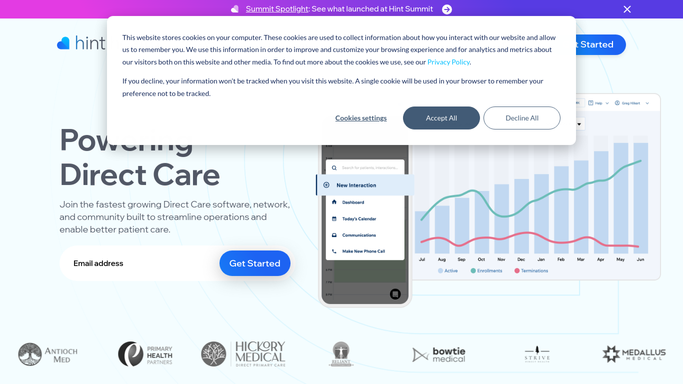
Automated Hint Health Membership Revenue Digest
Every Monday, WebRun pulls the prior week's membership revenue data from Hint Health, summarizes active members, new enrollments, cancellations, and total collected fees, and posts the digest to Slack so leadership has a clear financial pulse without opening a report.
Hint HealthSlackGoogle Sheets
Automated Hint Health Membership Renewal Reminders
WebRun checks Hint Health each morning for memberships expiring in the next 30 days and queues a renewal reminder draft for each member so no subscription lapses without a prompt.
Hint HealthGoogle SheetsSlack
Automated Hint Health Employer Roster Reconciliation
Every Monday, WebRun compares the employer's latest member roster against active memberships in Hint Health, flags additions, terminations, and mismatches, and logs the discrepancy report to Google Sheets for staff to resolve.
Hint HealthGoogle SheetsSlack
Automated Hint Health Employer Invoice Follow-Up
Every Monday, WebRun checks Hint Health for employer group invoices unpaid past 15 days, logs each to a follow-up tracker in Google Sheets, and drafts a polite follow-up email for staff to review and send before the balance reaches 30 days.
Hint HealthGoogle SheetsGmail
Automated Hint Health Membership Dunning Drafts
Every Monday, WebRun reviews Hint Health for memberships with an outstanding balance more than 14 days past due, drafts a polite dunning message for each, and queues the drafts in Google Sheets for staff to review and send.
Hint HealthGoogle SheetsSlack
Automated Hint Health Churn Risk Flags
Every Monday, WebRun reviews Hint Health for members showing churn signals such as missed visits, upcoming renewals with no recent engagement, or failed payments, and posts a prioritized risk list to Slack so staff can intervene early.
Hint HealthSlackGoogle Sheets
Automated Hint Health Care Gap Report
Every Monday, WebRun reviews active Hint Health members for common preventive care gaps such as overdue screenings, missing vaccinations, and unscheduled chronic disease follow-ups, and logs a prioritized care gap list to Google Sheets for the care team.
Hint HealthGoogle SheetsTelegram
Automated Hint Health Annual Visit Recall Reminders
Every Monday, WebRun checks Hint Health for members who have not had an annual wellness visit in the past year, logs the recall list to Google Sheets, and queues a recall outreach draft for staff review.
Hint HealthGoogle SheetsTelegram
Automated Opendock Truck Dwell Time Report
Every Monday, WebRun calculates dwell time for every completed dock appointment in Opendock and delivers a ranked carrier dwell report to Google Sheets so you can identify where time is being lost.
OpendockGoogle Sheets

Want one of these running on your own Google Sheets?

Show WebRun the process once and it will run it on schedule, in your own private browser environment.