How to Automate Google Sheets

You automate Google Sheets in three layers. Formulas and functions handle anything that stays inside the sheet. Apps Script and scheduled triggers handle repeatable jobs on a timer. Getting the numbers in from tools that have no export is the layer most people still do by hand, and the one worth handing to an agent like WebRun.

Google Sheets quietly became the company database

Google Sheets, which plenty of people still call a Google Spreadsheet, is the free spreadsheet in Google Workspace. In most small companies it quietly became the place where the business is actually run. It holds the customer list, the job schedule, the stock count, the commission working and the numbers someone reads out on Monday morning.

It earned that job by being easy to get into. It opens in a browser, several people can type in it at once, and nobody has to ask an administrator for a licence. The bookkeeper, the office manager and the owner can all be in the same tab at the same time, which is more than can be said for most of the software those three were given.

So the spreadsheet sits downstream of every other tool you own. The booking system, the card terminal, the accounting package and the inbox all feed one sheet, because it is the only place all of it can sit side by side.

Every number in it arrives by hand

Almost none of the time spent on a spreadsheet is spent thinking. It goes on moving numbers into it.

Someone opens the booking system every morning, reads yesterday's total off a dashboard, and types it into a cell. Someone exports a report from the CRM, opens the CSV, deletes three columns and pastes the rest into a tab. Someone checks four supplier portals for prices that changed and updates a column by hand. Someone copies the same figures into a second, tidier sheet for a manager who will never open the first one.

Each takes a few minutes, which is exactly why nobody ever fixes them. They become visible only when the person who does them is on holiday and the sheet goes stale for a fortnight, or when a number gets typed wrong and a decision gets made on it.

The google.com homepage, the app these three jobs run in. Google Sheets
Filling the sheet Yesterday's orders, bookings, balances and ad spend, collected from wherever they live and written into the right row before you open the tab.
Working through the sheet Taking each row and doing something with it somewhere else: a reminder sent, a price checked, a status looked up and written back.
Getting the sheet read Turning the tab nobody opens into a short summary that lands in the place your team already looks every morning.

Formulas only reach what is already open to them

The sheet does more on its own than most people use, and it is worth knowing how far that reaches before paying for anything. One sheet can read a range out of another and stay in step with it. A long tab can be filtered down to a short one that updates itself. A table on a public web page can be pulled in and refreshed. Apps Script will run a job on a timer, so a nightly tidy-up or an emailed snapshot really can be set and forgotten.

Every one of those has the same ceiling. They can only reach what is already open to them: another spreadsheet, a public page, a tool with an API and someone on hand to write against it.

The numbers you actually want are almost never in those places. They are behind a login, on a screen, in a supplier portal or a bank or a booking system or a twenty-year-old piece of trade software, sitting there in plain sight with no export button anywhere near it. That is the wall, and it is the reason someone in your office is still retyping figures at nine in the morning.

A spreadsheet that goes and fetches for itself

Change that, and the question stops being what can I import and becomes what do I want to know.

You buy from six suppliers, and every one shows live prices and stock behind its own login. That can be a column instead: this morning's price against what you paid last time, so the line that moved is obvious before you order.

You ship. Tracking numbers go out and somebody spends an afternoon pasting them into courier sites one at a time. Those statuses can be sitting in the sheet by the time you open it, with anything that stopped moving pushed to the top.

The same trick works on anything you can see in a browser. What your competitors are charging today. Which of your listings slipped off the first page. The takings from a system that only ever shows them on a dashboard. Whether the permit you are waiting on has changed status yet. None of it needs an API, a developer, or an integration somebody else has to build first.

One rule holds across all of it: automate the collecting, keep the deciding. A sheet that fills itself overnight is a gift. A sheet that emails your customers on its own is a risk, and should never send without a person saying yes.

An agent does the retyping

Between the portal where the number lives and the cell it belongs in sits a person. Only the deciding needs one.

WebRun is an AI agent that works a real Chrome browser, signed in as you. It opens the supplier portal, reads the price off the screen, and writes it into the right row of your spreadsheet. Because it uses the browser rather than an API, it reaches anything you can reach: no key to generate, no add-on, no integration that has to exist first.

It runs on your schedule in your own private environment. You can watch a run and stop it mid-way, and anything irreversible drafts and waits for you.

The workflows below are already built. Each one names the apps it touches and the steps it takes, so you can read what it does before you switch it on.

Questions people ask

Do I need to turn on the Google Sheets API or share my spreadsheet?

No. WebRun opens Google Sheets in a real browser signed in as you, so it works with the access you already have. There is no API key, no add-on and no change to the sharing settings on the file.

Will it overwrite the data already in my sheet?

Only where you point it. Most workflows append a new row or write into one named column, and each template spells out which cells it touches before you turn it on. Writing to a raw tab that your working tabs read from keeps typed work safe either way.

Can it pull numbers out of a tool that has no export button?

Yes, and that is usually the reason to use it. WebRun reads the figure off the screen the way a person would, then writes it into your spreadsheet, so a dashboard with no export is no longer a dead end.

4,178 ready-made Google Sheets workflows

Each one names the apps it touches and the exact steps it takes. Open one to read what it will do, then turn it on.

Automated Tinsel CRM Proposal Nudges
Every morning, WebRun finds Tinsel CRM proposals still marked unaccepted after a week, drafts a gentle nudge email in Gmail with a closing date, and logs the stalled deal to your Google Sheets pipeline tracker.
Tinsel CRMGmailGoogle Sheets
Automated Housecall Pro Punch List Recaps
When a multi-item punch list job is marked complete in Housecall Pro, WebRun drafts a plain-language recap of every item finished for the customer in Gmail, and logs the job to a Google Sheet for your quality records.
Housecall ProGmailGoogle Sheets
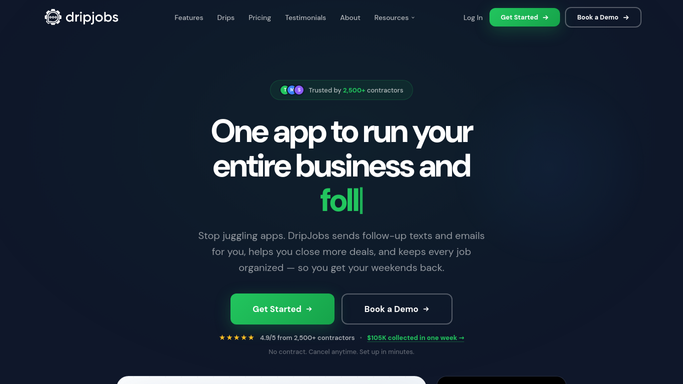
Automated DripJobs Aging Estimate Nudges
WebRun finds gutter estimates that have sat unaccepted for 14 days or more, logs them with days outstanding in Google Sheets, and posts your sales team a prioritized Slack nudge sorted by value so nothing quietly expires.
DripJobsGoogle SheetsSlack
Automated PeriWatch Unit Acuity Staffing Alerts
WebRun reads live patient acuity and volume in PeriGen every hour, checks it against your unit's staffing ratio, and alerts the charge nurse and supervisor in Teams before the unit is stretched thin.
PeriGenMicrosoft TeamsGoogle Sheets
Automated symplr Reappointment Due Alerts
Every Monday, WebRun checks symplr for medical staff whose two year reappointment cycle is due within 90 days, logs each file to a tracking sheet, and prepares the reappointment packet in DocuSign without sending it, ready for your credentialing team to route.
symplrGoogle SheetsDocuSign
Automated WellSky Ventilator Weaning Reports
Every morning before rounds, WebRun pulls each ventilated patient's weaning trend from WellSky, logs it to Google Sheets, and posts the report to Microsoft Teams for the rounding team.
WellSkyGoogle SheetsMicrosoft Teams
Automated Visage 7 Worklist Balancing Alerts
WebRun checks Visage 7 worklist load per radiologist through the shift, logs the split to Google Sheets, and alerts Microsoft Teams the moment one reader is overloaded.
Visage ImagingGoogle SheetsMicrosoft Teams
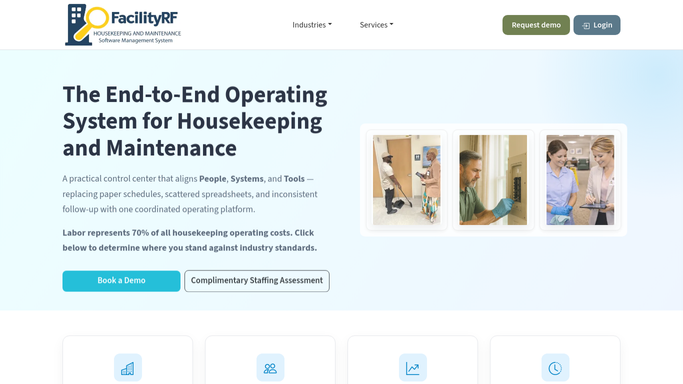
Automated Terminal Clean Completion Tracking
Every hour, WebRun checks FacilityRF's Inspect Now checklist for completed terminal cleans, verifies every item was done, logs the timing to Google Sheets, and notifies infection prevention in Microsoft Teams.
FacilityRFGoogle SheetsMicrosoft Teams
Automated ShiftWizard Shift Confirmation Reminders
WebRun checks ShiftWizard each evening for tomorrow's scheduled nurses, drafts a confirmation text through Twilio for the charge nurse to send, and logs who has confirmed to Google Sheets so gaps surface overnight instead of at shift change.
ShiftWizardTwilioGoogle Sheets
Automated Craneware Underpayment Recovery Worklist
Every Monday, WebRun checks Craneware for claims paid below the contracted rate, ranks them into a recovery worklist in Google Sheets with a drafted dispute note for each, and posts your recovery team a Slack summary of what to chase first.
CranewareGoogle SheetsSlack
Automated ICNet Surgical Site Infection Tracking
Every Monday, WebRun checks ICNet for surgical patients due for their 30 or 90 day SSI surveillance window, logs each to a Google Sheets follow-up tracker with the procedure and due date, and posts the week's due list to Microsoft Teams so surgical and wound care staff complete every assessment on time.
ICNetGoogle SheetsMicrosoft Teams
Automated Dolbey Uncoded Chart Backlog Digest
Every night, WebRun opens Dolbey, counts uncoded charts by service line and age, logs the totals in Google Sheets, and posts the coding manager a Slack digest of where the backlog is growing.
DolbeyGoogle SheetsSlack
Automated Solventum Query Escalations
WebRun checks Solventum 360 Encompass every morning for physician queries that passed their response window with no answer, logs each one to an escalation register in Google Sheets, and posts a Teams alert to your CDI physician advisor.
SolventumMicrosoft TeamsGoogle Sheets
Automated iQueue Underused Block Alerts
Every Monday, WebRun reviews the trailing four weeks of block utilization in LeanTaaS iQueue, flags any block stuck below your target for multiple weeks running, logs it to a tracking sheet, and posts the OR director a short list of blocks that need a conversation.
LeanTaaS iQueueGoogle SheetsSlack
Automated QGenda Block Utilization Report
WebRun calculates every surgeon and service's OR block utilization from QGenda each week, logs the breakdown to a Google Sheet, emails a summary to leadership in Outlook, and posts the headline numbers to Slack.
QGendaGoogle SheetsOutlook
Automated Transport Wait Time SLA Flags
WebRun measures how long each transport request waits from submission to pickup in Patient Focused Systems, flags any exceeding your SLA, and logs them to a Google Sheet for daily QA review.
Patient Focused SystemsGoogle Sheets
Automated TeleTracking Shift Change Census Handoff
At every shift change, WebRun compiles the current ED census from TeleTracking, including holds, boarders, and pending beds, posts a handoff summary to Microsoft Teams, and logs it to a Google Sheet for the outgoing and incoming charge nurse.
TeleTrackingMicrosoft TeamsGoogle Sheets
Automated MicroBiz Web vs Store Sales Recap
Every Monday, WebRun pulls in-store sales from MicroBiz and online orders from Shopify, builds a side-by-side comparison in Google Sheets, and shows you which channel and which products are actually driving the week.
MicroBizShopifyGoogle Sheets
Automated LithosPOS Scale Reconciliation
Every Monday, WebRun compares what LithosPOS scales recorded as sold by weight against what's left in inventory, flags any gap past your tolerance, and posts a reconciliation report to Telegram.
LithosPOSGoogle SheetsTelegram
Automated Online vs In-Store Sales Recap
Every Monday, WebRun opens Rain POS, splits last week's sales between the counter and the website, and posts you a clear Slack recap of which channel is pulling ahead.
Rain POSGoogle SheetsSlack
Automated Sintel Bulk Bin Reconciliation
Every Monday, WebRun compares each bulk bin's weight sold in Sintel Systems against its starting and ending stock weight, logs any variance to Google Sheets, and drafts a shrinkage adjustment in QuickBooks Online for your accountant to review.
Sintel SystemsGoogle SheetsQuickBooks Online
Automated Category Margin Recap Report
Every Monday, WebRun pulls last week's sales by category from Artisan POS, matches them to actual cost in QuickBooks, logs the true margin to Google Sheets, and pings Telegram with the categories worth watching.
Artisan POSQuickBooksGoogle Sheets
Automated Refill Revenue Recap
WebRun totals last week's Subscribe-and-Save refill charges in VitaHealth POS, logs the revenue and subscriber counts to a Google Sheet, and sends you a Telegram recap with the week over week trend.
VitaHealth POSGoogle SheetsTelegram
Automated Peblla Labor vs Sales Recap
Every Monday, WebRun pulls a week of sales from Peblla and scheduled hours from Homebase, works out your labor to sales ratio by day, and logs the recap to a sheet.
PebllaHomebaseGoogle Sheets

Want one of these running on your own Google Sheets?

Show WebRun the process once and it will run it on schedule, in your own private browser environment.