How to Automate CoreCampus
CoreCampus automates the record itself: clock-hour attendance, award packaging, disbursement tracking, transcripts and the SAP, IPEDS and FISAP reporting that comes out of them. Checking that record against banks, licensing boards and employer portals is the gathering work an agent like WebRun runs overnight.
 Written by
Samuel Adeyemi
Integrations writer
Written by
Samuel Adeyemi
Integrations writer
 Reviewed by
Aiko Tanabe
Product researcher
Reviewed by
Aiko Tanabe
Product researcher
A trade school is measured in clock hours
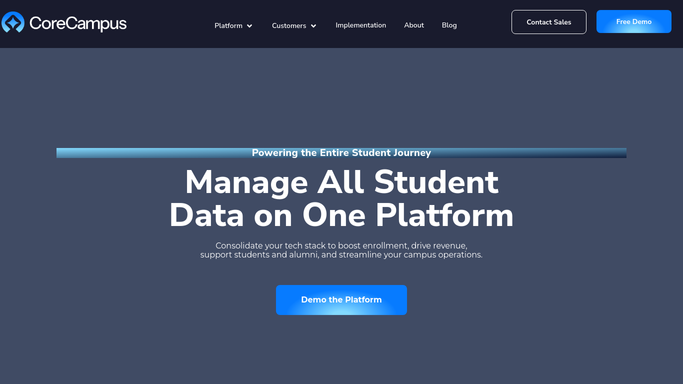
CoreCampus is the student information system a career school, trade school or small college runs on. It was called Campus Cafe Software until recently, and the company has been in these buildings since 1986, which in this corner of software means the people using it have used it for a very long time.
It is not one module. Admissions, the academic registrar, student finance and billing, financial aid, faculty management and advancement all sit against the same record, so a student is one continuous file from first enquiry to the alumni list.
That matters more here than at a university. A trade school teaches in clock hours rather than credits, so attendance is not pastoral care. It is the unit the programme is measured in, and the thing federal funding is judged against. The system is where a student's hours, their aid package, their balance and their progress toward a licence all sit in one place.
The reporting deadlines are set outside the building
So most of the work is checking one part of that record against another, on a clock somebody else is holding.
Somebody runs the satisfactory academic progress list on Monday and writes the warning letters. Somebody compares tuition instalments against what the business office actually received. Somebody works out which students have met every prerequisite for the state licensing exam and prepares the eligibility paperwork. Somebody chases the instructor whose certification expires in six weeks.
Then a reporting season arrives and the same underlying data has to come back out in a different shape for a different agency, and a fortnight disappears into reconciling exports.
None of it is optional, none of it is interesting, and all of it is done by three people who also answer the phone.
The modules report on what is already inside them
CoreCampus covers a great deal of this within its own walls, and a school that has not switched it all on should before buying anything.
Digital attendance captures clock hours from a mobile app or through an integration with CourseKey, so faculty are not carrying paper registers. The financial aid module handles FAFSA and ISIR verification, award packaging, student loan tracking, disbursement and reconciliation, and keeps master promissory note, entrance and exit counselling status on the record. Around it sit degree audit and advising, plan of study, transcript management, course registration, self-service portals and document management with audit trails aimed squarely at accreditors. SAP, 1098-T, IPEDS, FISAP and 90/10 reporting all come out of the same data.
What it reports on is what is already inside it.
The bank statement is not. Neither is the state licensing board's published roster, the employer hosting an externship, the accrediting body's own portal, or the registry that says whether an instructor is still certified. All behind their own logins, none of them offering an export.
Placement and pass rates can be a running number
Half the answer to most compliance questions sits outside the system that asks it. Reach both halves on a schedule and the calendar stops being a fortnight of exports.
Students who dropped below the satisfactory academic progress threshold this week, listed with their clock hours and aid status, so a warning letter is drafted while there is still a term left to fix it. Tuition instalments past due, set beside what actually landed in the account, weekly rather than at term end.
Graduates matched against the licensing board's published pass list, so outcomes are a running number instead of a survey nobody answers. Instructor certifications checked against the registry that issued them, with anything lapsing inside the next quarter surfaced early. Externship confirmations collected from the employers hosting them, in one list, with a date against each.
The discipline here runs one way. Reading and comparing can happen overnight with nobody watching, because reading changes nothing. Writing to a student record, releasing an aid letter or emailing a family about money is a decision a qualified person makes, and it stays that way.
Reading the record and changing it are different acts
Assembling the evidence is a night's work. Deciding what it means is a registrar's judgement, and only one of those two has to be done by a person.
WebRun is an AI agent that works a real Chrome browser, signed in as you. It opens CoreCampus, the bank, the licensing board's site or an accrediting portal, reads each one, and hands back the comparison with every difference named and its source shown.
It runs on your schedule inside your own private environment, and a run can be watched and stopped. Nothing is written back into a student record, and nothing reaches a student or a family until somebody qualified has approved it.
The workflows below each name the screens they open.
Questions people ask
Does anything get typed back into the student record?
No. Reading and comparing is the whole of it. Records under Title IV and accreditation rules are changed by the people accountable for them, so an agent gathers the evidence and stops there.
Is student data safe with an agent signed in as us?
It runs in your own private environment on your schedule, and you can watch a run and stop it. It sees the screens your staff already see, under a policy naming which sites it may open at all.
We already run SAP reports out of CoreCampus. Why add this?
Keep running them. The report tells you who fell below the threshold. This covers what the report cannot see: whether the payment reached the bank, whether the licence was granted, whether the instructor is still certified.
12 ready-made CoreCampus workflows
Each one names the apps it touches and the exact steps it takes. Open one to read what it will do, then turn it on.



Want one of these running on your own CoreCampus?
Show WebRun the process once and it will run it on schedule, in your own private browser environment.